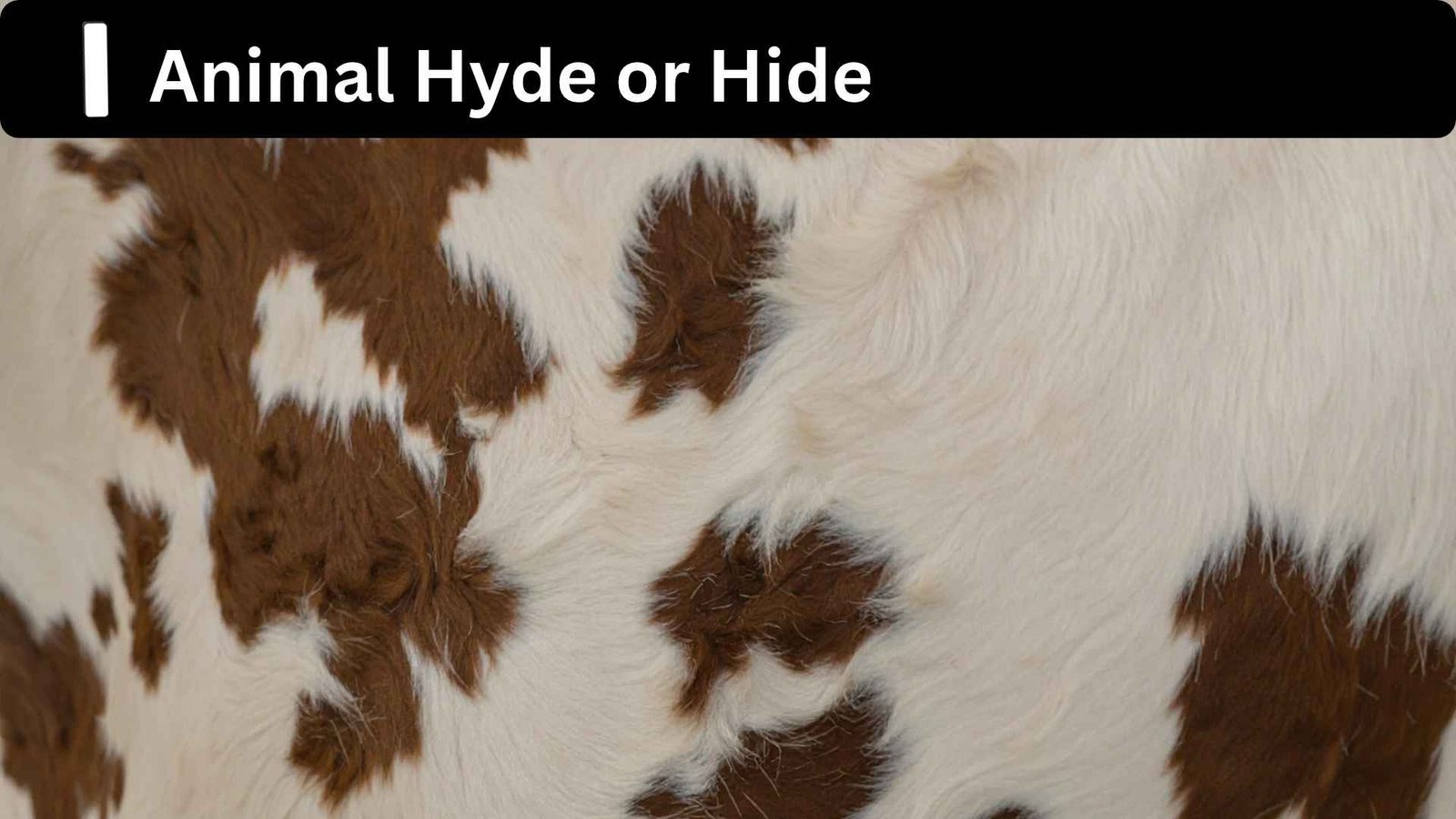
Animal hyde or hide? The correct spelling is animal hide when referring to the skin of an animal, especially the skin of a cow, buffalo, horse, or another large mammal. The word “hyde” is not the standard spelling for animal skin in modern English. Instead, “Hyde” is commonly used as a surname, place name, or proper noun.
Many people confuse these words because they sound exactly the same when spoken. However, their meanings and uses are different. Choosing the correct spelling is important when writing about animal skins, leather products, traditional clothing, or leather manufacturing.
Understanding the difference between animal hyde or hide also helps you avoid common spelling mistakes in school assignments, professional writing, and everyday communication.
This guide explains the correct spelling, definitions, pronunciation, grammatical uses, examples, and differences between animal hide or animal skin. You will also learn about different types of hides, how animal hides become leather, and how to remember the correct spelling.
Animal Hyde or Hide: Which Is Correct?
The correct spelling is animal hide, not animal hyde.
An animal hide is the skin of an animal, particularly a large animal, that may be removed, preserved, processed, or converted into leather.
The word “hide” is recognized in standard English dictionaries and is commonly used in agriculture, leather manufacturing, fashion, and traditional crafts.
“Hyde,” on the other hand, is generally a proper noun. It appears in personal names and geographical locations but is not the standard term for animal skin.
Quick Comparison of Animal Hyde or Hide
| Feature | Animal Hide | Animal Hyde |
|---|---|---|
| Correct spelling | Correct | Incorrect for animal skin |
| Meaning | Skin of an animal | Not a standard term for animal skin |
| Word type | Common noun | Usually a proper noun |
| Pronunciation | /haɪd/ | /haɪd/ |
| Used in leather production | Yes | No |
| Common example | Cowhide leather | Hyde Park |
| Plural form | Hides | Hydes, as a plural surname |
| Recommended usage | Animal skin or leather | Names of people or places |
Simple rule: If you are discussing animal skin, leather, or materials made from animal skin, always use “hide.”
Correct Sentence Examples
- The farmer sold several animal hides to a leather manufacturer.
- Cowhide is commonly used to produce durable leather.
- The workers cleaned the buffalo hide before processing it.
- Animal hides have been used for clothing for thousands of years.
- The leather factory purchases raw animal hides from suppliers.
Incorrect Sentence Examples
Incorrect: The animal hyde was thick.
Correct: The animal hide was thick.
Incorrect: The company sells cow hydes.
Correct: The company sells cowhides.
Incorrect: Buffalo hyde is used to make leather.
Correct: Buffalo hide is used to make leather.
These examples show why “hide” is the correct choice when referring to animal skin.
What Does Animal Hide Mean?
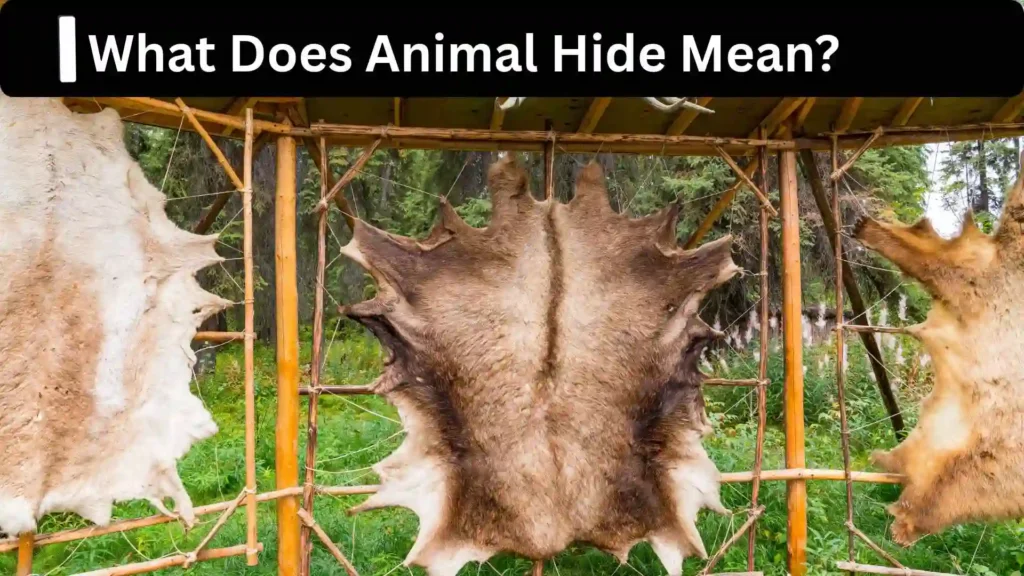
An animal hide is the skin of an animal, especially a large mammal such as a cow, buffalo, horse, or deer.
The word is commonly used when discussing skin that has been removed from an animal for preservation, processing, or manufacturing.
However, “hide” can also describe the thick skin covering a living animal.
For example:
“The rhinoceros has a thick hide.”
In this sentence, “hide” refers to the animal’s natural skin.
Definition of Animal Hide
In simple English, animal hide means:
The skin of an animal, particularly a large animal, that may be used to produce leather or other materials.
Animal hides contain several natural structures, including collagen fibers that provide strength and flexibility.
These properties make hides useful for producing durable materials.
The quality of a hide depends on factors such as:
- Animal species
- Age of the animal
- Skin thickness
- Natural texture
- Surface damage
- Preservation methods
- Processing techniques
High-quality hides are valuable because they can produce leather with desirable strength, appearance, and flexibility.
What Is Animal Hide Used For?
Animal hides have been used throughout human history for practical purposes.
Today, their most common commercial use is leather production.
Clothing: Processed hides are used to manufacture jackets, coats, gloves, and other garments.
Footwear: Leather made from animal hides is widely used in shoes, boots, and sandals.
Furniture: Leather upholstery is used on sofas, chairs, and vehicle seats.
Accessories: Animal-hide leather is used for wallets, handbags, belts, and luggage.
Traditional crafts: Preserved hides are used in certain drums, decorative items, and handmade products.
Shelters: Historically, animal hides were used to construct tents and other protective coverings.
These uses demonstrate the importance of animal hides in traditional societies and modern manufacturing.
What Does Hyde Mean?
“Hyde” is primarily a proper noun in modern English.
It is commonly found in family names, place names, and literary references.
Unlike “hide,” it does not normally describe animal skin.
Hyde as a Surname
Hyde is an established English surname.
For example:
- Mr. Hyde visited the office.
- The Hyde family moved to another city.
- Sarah Hyde is the author of the report.
In these sentences, Hyde refers to a person’s name.
Hyde as a Place Name
Hyde also appears in geographical names.
One familiar example is Hyde Park in London.
The spelling must remain “Hyde” because it is part of the official name.
Hyde in Literature
Hyde is also associated with the character Mr. Hyde from Robert Louis Stevenson’s Strange Case of Dr Jekyll and Mr Hyde.
In this context, Hyde is a character’s surname.
It has no connection to the modern meaning of animal hide.
Is Hyde a Real English Word?
Yes. Hyde is a recognized proper noun, and historical forms of English and Scots also contain older uses of the spelling.
However, hyde is not an accepted alternative to hide for animal skin in standard modern English.
This distinction matters because a spelling can exist historically or as a name without being appropriate in everyday writing.
Why Do People Confuse Animal Hyde or Hide?
The main reason people confuse these spellings is pronunciation.
Both “hyde” or “hide” are pronounced the same way.
Their pronunciation is represented as:
/haɪd/
This sounds similar to the English word “high” followed by a “d” sound.
Hyde or Hide as Homophones
Homophones are words that sound alike but have different spellings or meanings.
Hyde or hide are homophones in contexts where Hyde is used as a name.
Other common examples include:
| Word Pair | Meaning |
|---|---|
| Their or there | Possession or location |
| Right or write | Correct or form letters |
| Peace or piece | Calmness or a portion |
| Flour or flower | Baking ingredient or plant bloom |
| Knight or night | Historical warrior or nighttime |
| Sea or see | Large body of water or vision |
Because the pronunciation does not reveal the spelling, writers must rely on meaning and context.
How to Avoid This Spelling Mistake
The easiest way to remember the difference is to connect each word with its meaning.
Hide = Animal skin
Hyde = A person’s name or place name
For example:
“The cow has a thick hide.”
“Mr. Hyde lives in London.”
If the sentence refers to skin, use “hide.”
If it refers to a person or place whose name is Hyde, use “Hyde.”
Animal Hide or Animal Skin: What Is the Difference?
Animal hide or animal skin are closely related terms, but they are not always interchangeable.
“Animal skin” is a general biological expression, while “animal hide” is commonly used in leather manufacturing and related industries.
What Is Animal Skin?
Animal skin is the outer covering of an animal’s body.
It protects internal tissues, helps regulate body temperature, and provides a barrier against environmental conditions.
The term applies to animals of many different sizes.
For example:
- Cow skin
- Goat skin
- Sheep skin
- Rabbit skin
- Snake skin
Animal skin can refer to the covering of a living animal or skin that has been removed.
What Is Animal Hide?
Animal hide generally refers to the skin of a large animal.
In leather production, the term is especially common for cattle, horses, and buffalo.
Examples include:
- Cowhide
- Buffalo hide
- Horsehide
- Deer hide
The distinction between hide or skin may vary according to industry terminology.
Animal Hide or Animal Skin Comparison
| Animal Hide | Animal Skin |
|---|---|
| Commonly refers to larger animals | Applies to animals generally |
| Frequently used in leather manufacturing | Frequently used in biology |
| Often refers to removed skin | Can refer to living skin |
| Example: Cowhide | Example: Rabbit skin |
| Common in material descriptions | Common in anatomical descriptions |
Key point: Every animal hide is skin, but the word “skin” has a broader meaning.
Animal Hide or Leather: Are They the Same?
Animal hide or leather are related materials, but they are not identical.
Animal hide is the skin itself, while leather is animal skin that has undergone tanning.
Tanning helps stabilize the material and improves its resistance to decomposition.
What Is Raw Animal Hide?
Raw animal hide is skin that has been removed from an animal but has not undergone tanning.
It contains moisture, proteins, and other natural substances.
Without proper preservation, raw hides can deteriorate because of bacterial activity.
Common preservation methods include:
- Salting
- Drying
- Refrigeration
- Controlled curing
These methods help protect hides before leather processing.
What Is Leather?
Leather is a durable material produced through the tanning of animal hides or skins.
Tanning changes the collagen structure and helps prevent rapid decomposition.
Leather is widely used in clothing, furniture, footwear, and accessories.
Animal Hide or Leather Comparison
| Animal Hide | Leather |
|---|---|
| Natural animal skin | Tanned animal skin |
| May be raw or preserved | Has undergone tanning |
| Can deteriorate without preservation | More resistant to decomposition |
| Starting material for leather | Processed material |
| Requires further treatment for many uses | Suitable for various manufacturing applications |
A hide does not automatically become leather after removal from an animal. It must first undergo tanning.
Different Types of Animal Hides
Different animal species produce hides with different textures, thicknesses, and strengths.
These characteristics influence how the material is processed and used.
Cowhide
Cowhide is one of the most common materials used in leather manufacturing.
It is known for its durability, strength, and versatility.
Common products include:
- Leather jackets
- Shoes
- Belts
- Handbags
- Furniture upholstery
Cowhide can be processed into different types of leather depending on the tanning and finishing methods.
Buffalo Hide
Buffalo hide is often thick and strong.
It can produce durable leather with a distinctive grain pattern.
It is commonly used for bags, belts, footwear, and upholstery.
Horsehide
Horsehide has a dense fiber structure and is valued for its durability.
It is sometimes used for premium leather jackets, footwear, and accessories.
Deer Hide
Deer hide can produce soft and flexible leather.
Properly processed deerskin is commonly used for gloves, garments, and traditional crafts.
Sheepskin
Sheepskin is generally softer and lighter than many large-animal hides.
It is used for clothing, footwear, and decorative products.
When the wool remains attached, it can be used to produce shearling materials.
Goatskin
Goatskin is flexible, relatively strong for its thickness, and known for its distinctive surface grain.
It is commonly used in gloves, jackets, bags, and bookbinding.
In commercial terminology, sheepskin or goatskin are often classified as skins rather than hides.
How Is Animal Hide Turned Into Leather?
The transformation of animal hide into leather involves several important processing stages.
Each stage contributes to the durability, appearance, and flexibility of the finished material.
Step 1: Preserving the Hide
Fresh animal hides can deteriorate quickly if they are not properly preserved.
Salting, drying, or refrigeration may be used to slow bacterial activity.
Preservation helps maintain the hide’s condition before processing.
Step 2: Soaking and Cleaning
Preserved hides are soaked in water to remove dirt, salt, blood, and other unwanted substances.
This process also helps restore moisture.
Step 3: Removing Hair and Unwanted Tissue
Depending on the intended product, hair and unwanted tissue are removed.
Specialized equipment and controlled chemical treatments may be used.
Step 4: Tanning the Hide
Tanning is the key process that transforms raw hide into leather.
Common methods include:
Vegetable tanning: Uses tanning compounds obtained from plant materials.
Chrome tanning: Uses chromium-based tanning agents to produce leather with useful softness and flexibility.
Alternative tanning methods: Use other chemical or mineral systems to achieve particular leather properties.
Different tanning methods produce different results.
Step 5: Drying and Finishing
After tanning, leather may undergo drying, dyeing, softening, coating, or polishing.
These treatments improve its appearance and performance.
The finished leather can then be used to manufacture products.
Is It Cowhide or Cowhyde?
The correct spelling is cowhide.
Cowhide refers to the skin of a cow, particularly when used as a material for leather production.
The word is normally written as one word.
“Co whyde” or “cowhyde” are not standard spellings.
Correct Examples of Cowhide
- Cowhide leather is commonly used for footwear.
- The manufacturer produces genuine cowhide bags.
- Cowhide rugs are available in different natural patterns.
- The sofa is covered with cowhide leather.
- The craftsman selected a high-quality cowhide.
Common Animal Hide Spelling Mistakes
| Correct Spelling | Incorrect Spelling |
|---|---|
| Animal hide | Animal hyde |
| Cowhide | Cowhyde |
| Buffalo hide | Buffalo hyde |
| Horsehide | Horsehyde |
| Deer hide | Deer hyde |
| Rawhide | Rawhyde |
| Animal hides | Animal hydes |
| Leather hide | Leather hyde |
These examples show that the correct spelling consistently uses “hide.”
What Is the Plural of Animal Hide?
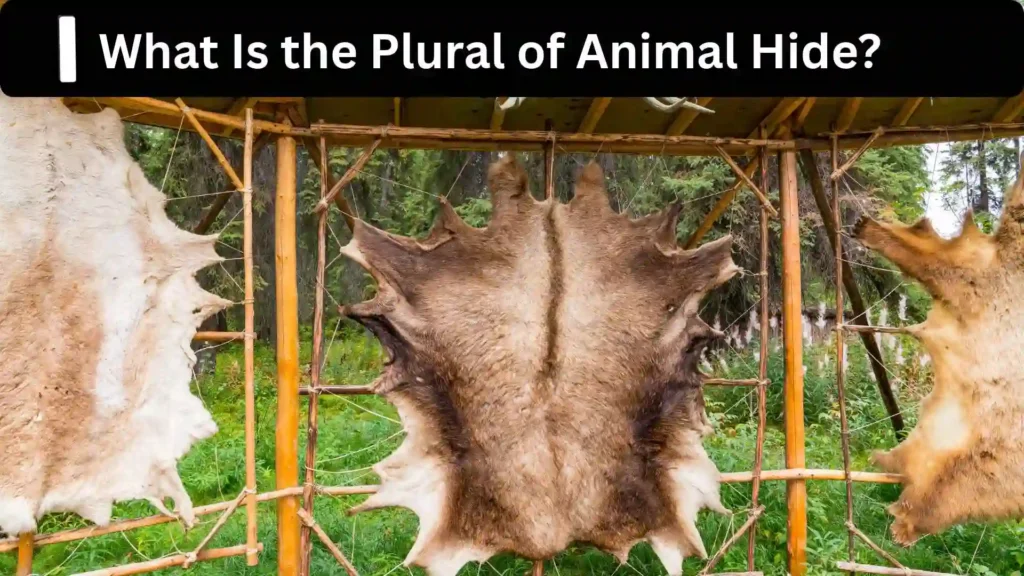
The plural of animal hide is animal hides.
To form the plural, simply add “s” to “hide.”
Singular: Animal hide
Plural: Animal hides
Singular Examples
- The animal hide was thick.
- A cowhide was placed on the table.
- The worker inspected the hide.
- One buffalo hide was delivered.
Plural Examples
- Several animal hides were stored in the warehouse.
- The factory processes hundreds of hides.
- The trader purchased ten cowhides.
- The workers cleaned the hides before tanning.
The spelling “animal hydes” is incorrect when discussing animal skin.
Other Meanings of Hide in English
The word “hide” has several meanings beyond animal skin.
It can function as a noun or a verb, depending on the sentence.
Hide as a Noun
As a noun, “hide” can refer to animal skin.
Example:
“The elephant has a thick hide.”
In British English, it can also refer to a concealed structure used for watching wildlife.
Example:
“The photographer waited inside a birdwatching hide.”
Hide as a Verb
As a verb, “hide” means to conceal something or keep it out of sight.
Examples:
- The child tried to hide behind the door.
- Please hide the birthday present.
- The rabbit hides inside its burrow.
- She wanted to hide the surprise.
Verb Forms of Hide
| Verb Form | Word |
|---|---|
| Base form | Hide |
| Past tense | Hid |
| Past participle | Hidden |
| Present participle | Hiding |
| Third-person singular | Hides |
Examples:
Present: I hide the gift.
Past: I hid the gift yesterday.
Past participle: I have hidden the gift.
Continuous: I am hiding the gift.
These forms apply when “hide” functions as a verb.
Common English Expressions Using Hide
The word “hide” appears in several everyday English expressions.
Understanding these expressions can improve vocabulary and reading comprehension.
Save Your Hide
This informal expression means to protect yourself from danger, punishment, or trouble.
Example:
“He apologized quickly to save his hide.”
Thick Hide
A person with a thick hide is not easily hurt by criticism.
Example:
“You need a thick hide when working in a highly competitive environment.”
Hide or Hair
The expression “hide or hair” is used when discussing any sign or trace of someone or something.
Example:
“We haven’t seen hide or hair of him all week.”
Hide Away
“Hide away” means to stay somewhere private or keep something out of sight.
Example:
“She decided to hide away in a quiet cabin.”
These expressions all use the spelling “hide.”
Animal Hyde or Hide: 15 Correct Sentence Examples
The following examples demonstrate how to use “animal hide” naturally in different situations.
- The farmer sold an animal hide to a local leatherworker.
- Cowhide is commonly used to manufacture durable shoes.
- The buffalo hide was carefully cleaned before tanning.
- Animal hides have been used for clothing throughout history.
- The leather factory purchased several raw hides.
- A thick animal hide can provide protection against environmental conditions.
- The craftsman made a traditional drum using processed animal skin.
- The company specializes in products made from cowhide leather.
- The workers preserved the hides using salt.
- Deer hide can be processed into soft leather.
- The museum displayed clothing made from animal hides.
- Horsehide leather is sometimes used for premium jackets.
- The manufacturer inspected each animal hide for defects.
- Leather production begins with animal hides or skins.
- The quality of an animal hide affects the finished leather.
Each sentence uses the correct spelling.
Why Correct Spelling Matters for Students or Writers
Using correct spelling improves the clarity, credibility, and professionalism of written communication.
Confusing animal hyde or hide may seem like a small mistake, but it can change how readers understand your content.
Academic Writing
Students should use standard English spelling in essays, assignments, and research papers.
Example:
“Animal hides were important materials in early human societies because they provided clothing and shelter.”
Professional Writing
Businesses involved in leather manufacturing should use accurate terminology in product descriptions and technical documents.
Example:
“Our leather products are manufactured using carefully selected animal hides.”
Website Content
For websites discussing leather, clothing, or animal products, accurate spelling helps readers find relevant information.
Useful related terms include:
- Animal hide meaning
- Animal hide definition
- Cowhide leather
- Raw animal hide
- Animal skin
- Leather tanning
- Types of animal hides
- Hide processing
However, good SEO writing should prioritize clear explanations and helpful information rather than repeating keywords unnecessarily.
Correct spelling also makes content easier to understand for readers who are unfamiliar with the subject.
Easy Tricks to Remember Animal Hyde or Hide
Remembering the correct spelling does not have to be difficult.
A few simple tricks can help you choose the right word.
Trick 1: Connect Hide With Skin
Remember:
Hide = Skin
If you are discussing the skin of an animal, use “hide.”
Example:
“The cow has a thick hide.”
Trick 2: Connect Hyde With Names
Remember:
Hyde = Name
If you are referring to a person or place named Hyde, use the capitalized spelling.
Example:
“Hyde Park is located in London.”
Trick 3: Remember Cowhide
The word “cowhide” contains “hide.”
If you remember the correct spelling of cowhide, you can apply the same spelling to animal hide.
Trick 4: Check the Meaning
Before writing, ask yourself:
“Am I talking about animal skin or a person’s name?”
If the answer is animal skin, choose “hide.”
If the answer is a proper name, the spelling may be “Hyde.”
Frequently Asked Questions
Is It Animal Hyde or Hide?
The correct spelling is “animal hide.” It refers to the skin of an animal, particularly a large animal such as a cow, buffalo, or horse. “Animal hyde” is not standard modern English.
Is Hyde Another Word for Animal Skin?
No, not in standard modern English. Hyde is primarily used as a surname or place name. Historical forms of English and Scots included older spellings, but modern writing uses “hide” for animal skin.
What Is the Meaning of Animal Hide?
Animal hide means the skin of an animal, especially when it is removed, preserved, or processed for use in leather products.
Is It Cowhide or Cowhyde?
Cowhide is correct. It refers to the skin of a cow and is commonly used in leather manufacturing.
What Is the Difference Between Animal Hide or Animal Skin?
Animal skin is a general term for the outer covering of an animal. Animal hide usually refers to the skin of a larger animal, especially in leather manufacturing.
Is Animal Hide the Same as Leather?
No. Animal hide is the natural skin, while leather is animal skin that has undergone tanning to improve durability and resistance to decomposition.
What Is the Plural of Animal Hide?
The plural is “animal hides.”
Example:
“The factory received several animal hides.”
What Is the Difference Between Hide or Pelt?
A hide generally refers to animal skin, particularly from larger animals. A pelt commonly refers to skin with the fur or hair still attached. However, these terms can overlap depending on the context.
What Is the Difference Between Animal Hide or Fur?
Animal hide is the skin itself, while fur refers to the hair covering certain animals. A pelt may contain both skin and attached fur.
How Do You Pronounce Animal Hide?
The word “hide” is pronounced /haɪd/. It sounds like “high” with a “d” at the end.
Is Animal Hyde Grammatically Correct?
“Animal hyde” is not the standard expression for animal skin. The correct modern spelling is “animal hide.”
Is Animal Hide One Word or Two Words?
“Animal hide” is written as two words. However, related words such as “cowhide,” “horsehide,” and “rawhide” are generally written as single words.
What Are Animal Hides Used For?
Animal hides are used to produce leather for shoes, jackets, belts, handbags, furniture, and other products. Preserved hides may also be used in traditional crafts.
Which Animals Produce Hides?
Common sources include cattle, buffalo, horses, and deer. Sheep and goats also provide skins used in leather production.
Can Hide Be Used as a Verb?
Yes. As a verb, “hide” means to conceal something or keep it out of sight.
Example:
“The child tried to hide behind the tree.”
What Is the Past Tense of Hide?
The past tense of “hide” is “hid,” and the past participle is “hidden.”
Example:
“She hid the gift yesterday.”
Why Is Animal Hyde a Common Spelling Mistake?
People often confuse the words because “hyde” or “hide” have identical pronunciations. However, they have different uses in modern English.
Is Hide Used Only for Dead Animals?
No. “Hide” can also refer to the skin of a living animal, especially when describing thick or tough skin.
For example:
“The rhinoceros has a thick hide.”
What Is Rawhide?
Rawhide is animal skin that has been cleaned and prepared, often through drying, without undergoing conventional leather tanning.
It is used in certain traditional crafts, lacing, and other specialized products.
Is Animal Hide a Natural Material?
Yes. Animal hide is a natural biological material composed mainly of collagen-rich skin tissue. It can be preserved or processed into products such as leather.
Conclusion
When choosing between animal hyde or hide, the correct spelling is animal hide in standard modern English.
“Hide” refers to the skin of an animal, especially a large animal such as a cow, buffalo, horse, or deer. It is commonly used in leather manufacturing, clothing production, furniture, and traditional crafts.
“Hyde,” on the other hand, is primarily a proper noun used for personal names and geographical locations. It is not the standard spelling for animal skin.
The most important points to remember are simple:
- Animal hide is the correct spelling.
- Animal hyde is incorrect in standard modern English.
- Cowhide is correct, not cowhyde.
- The plural of animal hide is animal hides.
- Leather is produced by tanning animal hides or skins.
- Hide can also function as a verb meaning to conceal something.
By understanding these differences, you can confidently use the correct spelling in academic writing, everyday communication, product descriptions, and professional content.

I am Eleanor Whitmore, an education writer who enjoys making learning simple, practical, and interesting. I write about study skills, educational ideas, personal growth, and useful knowledge that readers can apply in everyday life. Through Teachlora, I aim to share clear and helpful content that makes learning feel easier and more enjoyable. My books, The Everyday Learning Guide and Small Steps to Smarter Learning, reflect my passion for helping readers build better learning habits.
Books:
- The Everyday Learning Guide
- Small Steps to Smarter Learning
 Oliver Harrington
 Nathaniel Brooks