If you are searching for bowtie or bow tie, you may be wondering which spelling is correct. Both forms appear in English, but they are not always used in the same way. For the clothing accessory worn around the neck, bow tie is the traditional and widely recognized spelling. Bowtie also appears as a closed compound in certain specialized terms, names, and other established uses.
The difference can seem small, but choosing the right form matters in formal writing, school assignments, articles, product descriptions, and everyday communication. It is also useful to understand the difference between bow tie, bowtie, bow ties, and bow tie’s, because these forms have different grammatical functions.
This guide explains bowtie or bow tie in detail, including their meanings, usage, sentence examples, plural forms, common mistakes, formal writing guidance, and frequently asked questions.
If you need a simple answer, use bow tie when you mean the clothing accessory unless you are following an established compound, name, or specialized term that uses bowtie.
Bowtie or Bow Tie: What Is the Difference?
The main difference between bow tie and bowtie is how the words are written and where each form is normally used.
Bow tie is an open compound made up of two words. It commonly refers to a piece of neckwear that is tied around the collar and forms a bow-shaped appearance.
Bowtie is a closed compound in which the two parts are joined into one word. It can appear in specialized expressions, established terminology, names, or particular styles of usage.
For ordinary references to the clothing accessory, bow tie is the clearest choice.
For example:
He wore a black bow tie with his tuxedo.
You may also encounter bowtie in specialized expressions:
The engineer studied a bowtie antenna.
The important point is that bowtie should not automatically be considered a spelling mistake. At the same time, you should not replace bow tie with bowtie every time you write about neckwear.
Is Bow Tie One Word or Two Words?
When referring to the traditional neckwear accessory, bow tie is normally written as two words.
For example:
- black bow tie
- silk bow tie
- red bow tie
- formal bow tie
- wedding bow tie
- men’s bow tie
Example:
James bought a blue bow tie for the wedding.
The two-word form is familiar and easy to understand, making it a good choice for general English writing.
Is Bowtie a Correct Spelling?
Yes, bowtie can be a correct spelling in certain contexts.
The closed form is used in some established compounds and specialized terminology. It may also appear in names, branding, or titles that have adopted the one-word spelling.
For example:
The researcher examined a bowtie antenna.
However, if you simply want to describe the neckwear worn with a tuxedo, bow tie remains the straightforward choice:
He wore a black bow tie.
The best spelling therefore depends on the particular meaning and expression.
What Does Bow Tie Mean?
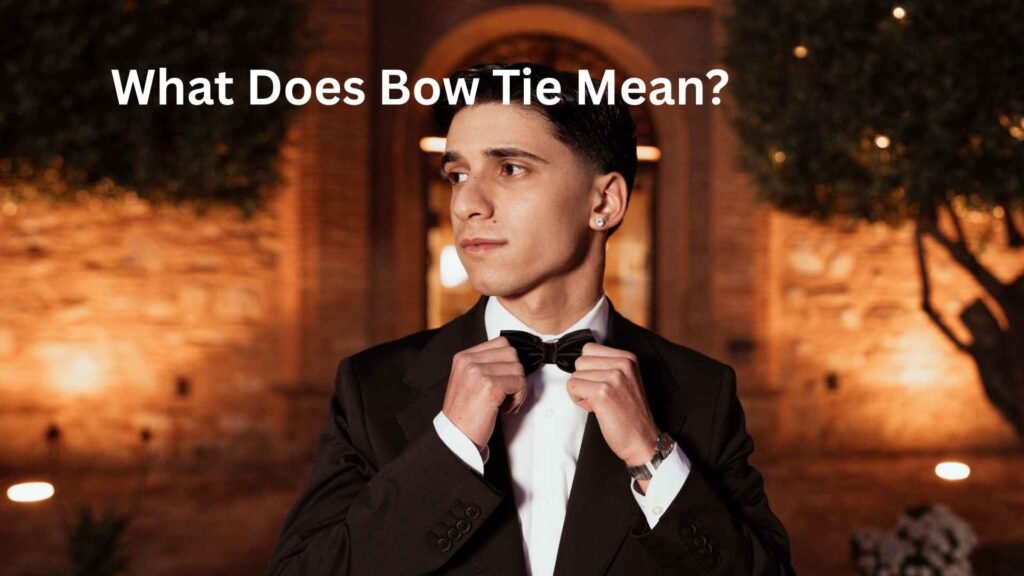
A bow tie is a type of neckwear that is tied around the collar of a shirt. The fabric forms two loops that resemble a bow.
Bow ties are commonly associated with formal and semi-formal clothing. They may be worn at weddings, formal dinners, ceremonies, parties, black-tie events, or other special occasions.
Examples include:
- black bow ties
- white bow ties
- silk bow ties
- patterned bow ties
- handmade bow ties
- adjustable bow ties
A bow tie can be worn with different types of formal clothing, although it is especially associated with tuxedos and other formal suits.
Why Is It Called a Bow Tie?
The name comes from the shape of the accessory. When tied around the neck, the fabric creates loops that resemble a bow.
The expression combines bow, referring to the bow-like shape, with tie, referring to something worn around the neck.
This explains why the traditional clothing term is naturally written as bow tie.
Bow Tie as a Fashion Accessory
Bow ties have a long association with formal clothing, but they can also be worn as fashion accessories in less formal settings.
For example:
He wore a colorful bow tie with a casual blazer.
A bow tie may be made from silk, cotton, wool, polyester, velvet, or other materials. Designs can range from plain colors to stripes, checks, floral patterns, or other prints.
When Should You Use Bow Tie?
Use bow tie when you are talking about the clothing accessory in ordinary English.
Examples:
I bought a new bow tie for the wedding.
He wore a black bow tie to dinner.
She chose a red bow tie for her formal outfit.
My brother learned how to tie a bow tie.
The groom’s bow tie matched his suit.
In each example, bow tie clearly refers to neckwear.
Bow Tie in Formal Writing
Bow tie is a suitable form for formal writing when you are referring to the clothing accessory.
For example:
The invitation requested that guests wear formal clothing with a bow tie.
You can use the term naturally in:
- School assignments
- Blog articles
- Formal emails
- Fashion articles
- Product descriptions
- Wedding guides
- Style guides
- General informational content
There is usually no need to close the two words simply because the expression is frequently used.
Bow Tie in Everyday English
The two-word form is also natural in conversation and informal writing.
For example:
Where did you buy that bow tie?
I forgot my bow tie at home.
Can you help me tie my bow tie?
These sentences sound natural because bow tie is the familiar name for the accessory.
When Should You Use Bowtie?
Bowtie can be used when it forms part of an established closed compound, specialized expression, name, or other recognized usage.
For example:
The engineer designed a bowtie antenna.
The report describes the bowtie effect.
The researcher used a bowtie diagram.
In these examples, bowtie is not simply being used as an alternative spelling for someone’s formal neckwear. It is part of a specific expression.
Bowtie in Specialized Terms
English contains many compound terms whose spelling depends on the terminology of a particular field.
For example, bowtie antenna is a technical term. In this context, using the established form is more useful than applying the ordinary clothing spelling automatically.
The same principle applies to other technical expressions. If a field consistently uses a particular spelling, follow the accepted terminology when writing for that audience.
Bowtie in Names and Branding
A company, product, organization, website, or other brand may intentionally use Bowtie as part of its official name.
If you are reproducing an official name, keep its established capitalization and spelling.
For example, if a product is officially branded with the word Bowtie, changing it to Bow Tie could make the name inaccurate.
Bow Tie or Bowtie in a Sentence
Knowing the spelling is easier when you can see both forms in context.
Examples With Bow Tie
He wore a black bow tie with his tuxedo.
I bought a silk bow tie for the ceremony.
Her bow tie matched her dress.
The child wore a colorful bow tie to the party.
He adjusted his bow tie before the photographs.
These examples use bow tie because the term refers to clothing.
Examples With Bowtie
The engineer tested the bowtie antenna.
The researcher explained the bowtie effect.
The diagram showed a bowtie-shaped structure.
These examples demonstrate how the closed form can occur in specialized language.
The exact spelling of a specialized expression should be checked according to the terminology of that field.
Bow Tie or Bowtie in American English
In American English, bow tie is the familiar spelling for the clothing accessory.
For example:
He wore a black bow tie to the formal event.
You may also see bowtie in specialized terms, names, branding, and other established uses.
Therefore, it is not accurate to treat bowtie as simply an American spelling of bow tie. The context determines the appropriate form.
Bow Tie or Bowtie in British English
British English also commonly uses bow tie for the neckwear accessory.
For example:
He wore a smart bow tie with his dinner jacket.
As in American English, the closed form can occur in particular compounds and specialized contexts.
The distinction between the two forms is therefore not simply a matter of American English versus British English.
Bow Tie or Bowtie for Formal Clothing
If you are writing about formal clothing, bow tie is generally the clearest form.
Examples:
A black bow tie is commonly associated with formal evening wear.
He selected a navy bow tie to wear with his suit.
The groom wore a white shirt and black bow tie.
This spelling makes the meaning immediately clear to readers.
Bow Tie With Tuxedo
A bow tie is strongly associated with tuxedos and other formal evening outfits.
For example:
He completed his tuxedo with a black bow tie.
The phrase bow tie should remain two words when you are simply referring to the accessory.
Bow Tie for Weddings
Bow ties are also common in wedding attire.
Examples:
The groom chose a navy bow tie.
The wedding party wore matching bow ties.
His patterned bow tie added a personal touch to the formal outfit.
Again, bow tie is the natural form when discussing the accessory.
What Is the Plural of Bow Tie?
The plural of bow tie is bow ties.
The plural is created by adding s to tie, not by adding an apostrophe.
Correct:
The store sells several bow ties.
Incorrect:
The store sells several bow tie’s.
The apostrophe is not used simply to make bow tie plural.
Bow Tie’s or Bow Ties?
These forms have different meanings.
Bow ties is the plural form.
The shop sells colorful bow ties.
Bow tie’s is normally possessive.
The bow tie’s color matched his shirt.
Here, bow tie’s means something belonging to or associated with one bow tie.
For example:
The bow tie’s fabric was soft.
This means the fabric of the bow tie was soft.
Bow Ties’ Meaning
Bow ties’ is a plural possessive form.
Example:
The bow ties’ colors were carefully selected.
Here, the apostrophe comes after the s because the sentence refers to something belonging to multiple bow ties.
Bow Tie or Bowtie: Common Mistakes
Several mistakes can occur when people write this term.
Mistake 1: Saying Bowtie Is Always Wrong
It is too broad to say that bowtie is always incorrect. The closed form can occur in established terms and names.
Mistake 2: Using Bowtie for Every Clothing Reference
When referring to ordinary neckwear, bow tie is the clearer traditional form.
Mistake 3: Writing Bow Tie’s for the Plural
The plural is bow ties, not bow tie’s.
Correct:
He owns three bow ties.
Incorrect:
He owns three bow tie’s.
Mistake 4: Assuming Every Compound Has One Fixed Pattern
English compounds can develop different forms. Some remain open, some become closed, and some use hyphens in particular constructions.
It is therefore better to consider the established usage of the specific expression.
Mistake 5: Changing an Official Name
If a brand or product officially uses Bowtie, do not change its spelling when referring to that official name.
Bow Tie or Bowtie: Quick Comparison
| Form | Typical use | Example |
|---|---|---|
| bow tie | Clothing accessory | He wore a black bow tie. |
| bowtie | Established compounds or specialized terms | The engineer tested a bowtie antenna. |
| bow ties | Plural of bow tie | She owns several bow ties. |
| bow tie’s | Singular possessive | The bow tie’s color was bright. |
| bow ties’ | Plural possessive | The bow ties’ designs were different. |
This comparison makes the basic distinction easier to remember.
Why Do Some Compounds Have Different Spellings?
English frequently creates compound words by combining two existing words. Over time, a compound can develop different written forms.
A term may begin as two separate words. Later, writers may use a hyphen or combine the words into one. Different dictionaries, industries, publishers, and communities can also preserve different conventions.
This is why English contains:
- Open compounds
- Closed compounds
- Hyphenated compounds
The spelling of a particular term should therefore be considered in context.
How to Remember Bow Tie or Bowtie
A simple memory rule can help:
Clothing accessory = bow tie
Established closed compound = bowtie
For example:
He wore a bow tie to the wedding.
But:
The engineer designed a bowtie antenna.
This is not a rule that applies to every possible expression, but it is a useful starting point for everyday writing.
Frequently Asked Questions About Bowtie or Bow Tie
Is bow tie one word or two?
When referring to the traditional clothing accessory, bow tie is normally written as two words.
Is bowtie a correct word?
Yes. Bowtie can be correct in certain established compounds, specialized terms, names, and other recognized uses.
Which is correct, bowtie or bow tie?
Both forms can be correct depending on context. For the clothing accessory, bow tie is the traditional and clearest choice.
Should I write bow tie or bowtie in formal writing?
If you are referring to the clothing accessory, bow tie is generally the safest choice for formal writing. If you are using a specialized term or official name that uses bowtie, retain that established form.
Is bow tie hyphenated?
When bow tie is used as the noun for the neckwear accessory, it is normally written as two words without a hyphen.
What is the plural of bow tie?
The plural is bow ties.
Example:
He owns several bow ties.
Is bow tie’s the plural?
No. Bow tie’s is normally possessive.
Example:
The bow tie’s color was dark blue.
The plural is bow ties.
What is the difference between bow ties and bow tie’s?
Bow ties is plural, meaning more than one bow tie.
Bow tie’s is possessive, normally showing that something belongs to or relates to one bow tie.
What is the plural possessive of bow tie?
The plural possessive is bow ties’.
Example:
The bow ties’ designs were different.
How do you use bow tie in a sentence?
You can write:
He wore a black bow tie with his tuxedo.
Is bowtie an American spelling?
Not specifically. The use of bowtie is not simply an American-versus-British distinction. The closed form appears in particular compounds and specialized usage, while bow tie is widely used for the clothing accessory.
Why is bow tie written as two words?
The traditional expression combines bow and tie to describe neckwear that forms a bow-like shape.
Can bowtie be used in a fashion article?
Yes, especially when referring to a brand, name, or established term that uses the closed spelling. For the ordinary clothing accessory, bow tie is the clearer traditional form.
Is bow tie the same as a necktie?
Both are types of neckwear, but they have different shapes and styles. A traditional necktie is long and hangs down the front of the shirt, while a bow tie forms a bow around the collar.
Conclusion
When deciding between bowtie or bow tie, context is the key.
For the traditional clothing accessory worn around the neck, bow tie is the familiar two-word spelling and the best general choice. For example:
He wore a black bow tie to the wedding.
Bowtie is also used in English, particularly in established compounds, specialized terminology, names, and branding. A technical expression such as bowtie antenna may use the closed form.
The plural of bow tie is bow ties, while bow tie’s normally shows possession. For example, bow ties means more than one accessory, while the bow tie’s color refers to the color of one bow tie.

I am Nathaniel Brooks, a writer passionate about education and lifelong learning. I believe good educational content should be easy to understand, useful, and enjoyable to read. At Teachlora, I create helpful articles about learning techniques, study habits, general knowledge, and skills that can support readers in their educational journey. I have also written Learn Better Every Day and The Practical Student Handbook to help readers approach learning with more confidence.
Books:
- Learn Better Every Day
- The Practical Student Handbook
 Clara Kensington
 Eleanor Whitmore