
Drive thru or drive through is a common spelling question that often confuses English learners, students, writers, and business owners.
You may see “drive-thru” on restaurant signs, while “drive-through” appears in newspapers, dictionaries, and formal writing. Both expressions are widely understood, but they are not always used in the same way.
The correct choice depends on your sentence and the context. Drive-through is the standard spelling when referring to a service or facility that customers can access without leaving their vehicles.
Drive-thru is an informal shortened spelling, commonly used in advertising, restaurant signs, and everyday American English.
There is another important distinction. When describing the action of traveling through a place in a vehicle, the correct form is drive through, written as two separate words.
In this guide, you’ll learn the differences between drive thru or drive through, including their meanings, spelling rules, pronunciation, grammar, examples, and common mistakes.
Drive Thru or Drive Through: Quick Answer
Both expressions can describe a service that allows customers to order, purchase, or collect something while remaining inside their vehicles.
However, their spelling and formality differ.
Drive-through is the standard spelling used in formal English.
Drive-thru is an informal alternative often used for business signs, advertisements, and casual communication.
Drive through is a verb phrase that describes traveling through a particular location.
Here is a quick comparison:
| Feature | Drive-Through | Drive-Thru |
|---|---|---|
| Meaning | Vehicle-accessible service | Same basic meaning |
| Spelling | Standard | Informal abbreviation |
| Formal writing | Preferred | Usually avoided |
| Restaurant signs | Common | Very common |
| Academic writing | Recommended | Generally not recommended |
| Advertising | Common | Very common |
| Pronunciation | DRYV THROO | DRYV THROO |
| Example | The drive-through is open. | The drive-thru is open. |
Easy rule: Use drive-through in standard writing, drive-thru in informal business communication, and drive through when describing an action.
Which Spelling Should You Choose?
Your choice depends on the purpose of your writing.
For an academic assignment, professional email, business report, or newspaper article, drive-through is generally the best option.
For a restaurant advertisement, promotional message, or casual social media post, drive-thru is also acceptable.
Examples:
- Formal: The restaurant introduced a new drive-through service.
- Informal: Our drive-thru is open until midnight.
- Verb phrase: We will drive through the city tomorrow.
Each sentence uses a form that fits its context.
Are Both Spellings Correct?
Yes, both spellings are recognized in modern English.
However, they are not equally appropriate in every situation.
Drive-through follows standard spelling conventions, while drive-thru is a shortened form associated with informal and commercial language.
Neither spelling changes the basic meaning when referring to a vehicle-accessible service.
What Does Drive Through Mean?
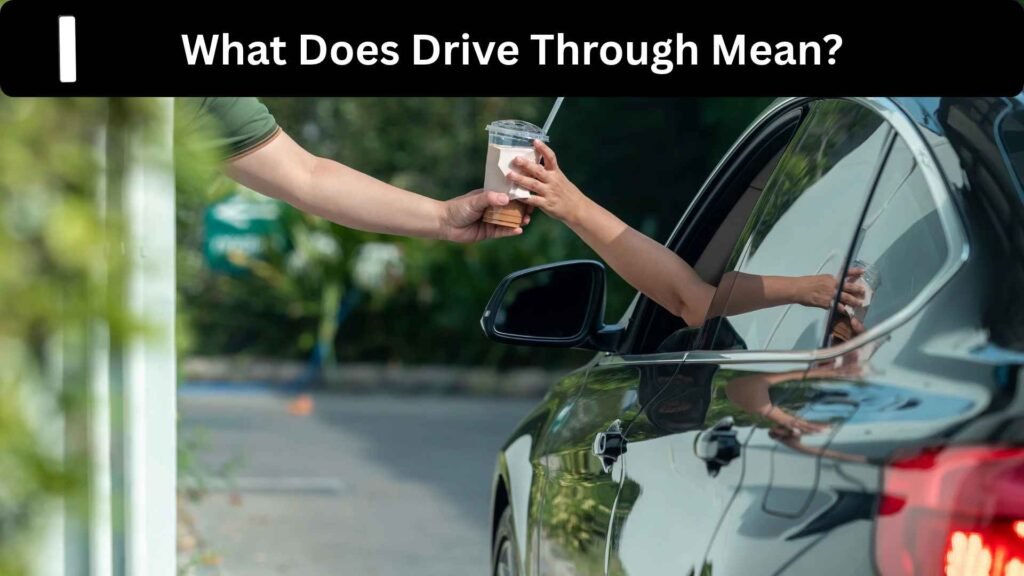
The phrase drive through means to travel through a place while operating a vehicle.
It can describe driving through a city, tunnel, forest, neighborhood, or other location.
The expression also appears in the compound word drive-through, which refers to a business service designed for customers in vehicles.
Understanding its grammatical function helps you choose the correct spelling.
Drive Through as a Verb Phrase
When drive through describes an action, it is written as two separate words without a hyphen.
In this expression, “drive” is the verb, while “through” indicates movement across or within a location.
Examples:
- We will drive through the city tomorrow.
- Please drive through the tunnel carefully.
- They decided to drive through the mountains.
- I often drive through this neighborhood.
- You can drive through the park during opening hours.
In every example, the subject is performing an action.
A hyphen is unnecessary because the words are functioning as a verb phrase.
Drive-Through as a Noun
Drive-through is a compound noun when it refers to a facility or service that allows customers to remain in their vehicles.
Examples:
- The restaurant has a drive-through.
- We ordered breakfast at the drive-through.
- The drive-through was crowded this morning.
- A new drive-through opened near the shopping center.
- Customers waited in the drive-through for their orders.
Here, drive-through names a service or physical facility rather than describing movement.
Drive-Through as an Adjective
Drive-through can also function as an adjective that describes another noun.
Examples:
- The restaurant offers drive-through service.
- She visited a drive-through pharmacy.
- The company installed a drive-through window.
- We stopped at a drive-through coffee shop.
- The bank provides drive-through banking facilities.
In these sentences, drive-through modifies words such as service, pharmacy, window, coffee shop, and facilities.
The hyphen connects the two parts into a compound modifier.
What Does Drive Thru Mean?
Drive thru is an informal shortened version of drive-through.
The word “thru” is an alternative spelling of “through” that is commonly used in American advertising and commercial signage.
When used for a business service, drive-thru has essentially the same meaning as drive-through.
For example, a drive-thru restaurant allows customers to order and collect food while remaining inside their vehicles.
Why Is Drive Thru Used?
Businesses often choose drive-thru because it is shorter and visually simpler than drive-through.
This spelling is especially useful for signs, advertisements, menus, and promotional materials.
Some common reasons include:
- Shorter wording: Drive-thru occupies less space on signs.
- Easy recognition: Customers quickly understand what the sign means.
- Marketing appeal: The spelling creates a casual, familiar impression.
- Brand consistency: Businesses may use it throughout their advertising.
- Convenience: Short words are easier to fit into compact designs.
Although drive-thru is informal, it has become a familiar expression in American commercial English.
Examples of Drive Thru in Sentences
Here are some everyday examples:
- Let’s stop at the drive-thru for coffee.
- The drive-thru closes at midnight.
- I ordered a burger from the drive-thru.
- The restaurant has two drive-thru lanes.
- We waited ten minutes at the drive-thru.
- The new drive-thru menu includes breakfast items.
- Customers can collect their orders at the drive-thru window.
- The drive-thru is open every day.
- She works at a busy drive-thru restaurant.
- The company plans to improve its drive-thru service.
These examples are natural in casual English, particularly in American restaurant-related conversations.
Drive Thru or Drive Through: Main Differences
The most important differences involve spelling, formality, grammatical function, and writing context.
Although both expressions can refer to the same service, choosing the appropriate form makes your writing clearer and more professional.
Difference in Spelling
Drive-through uses the complete word “through.”
Drive-thru replaces “through” with the shortened spelling “thru.”
Examples:
Standard: The drive-through opens at 7 a.m.
Informal: The drive-thru opens at 7 a.m.
The meaning remains the same.
Difference in Formality
Drive-through is preferred in formal writing because it follows standard spelling conventions.
Drive-thru is more suitable for casual messages, restaurant advertisements, and promotional signs.
Examples:
Formal: The company expanded its drive-through operations.
Informal: Visit our drive-thru today!
The second sentence uses a more promotional style.
Difference in Grammar
Drive through functions as a verb phrase.
Drive-through usually functions as a noun or adjective.
Drive-thru is commonly used as an informal noun or adjective.
Examples:
- Verb: We drive through town every morning.
- Noun: The drive-through is closed.
- Adjective: They opened a drive-through restaurant.
- Informal noun: The drive-thru is busy.
- Informal adjective: The drive-thru window is open.
Recognizing these grammatical roles can prevent common spelling mistakes.
Difference in Business Communication
Drive-thru frequently appears in commercial advertising because businesses value short, recognizable wording.
Drive-through is also used in business communication, especially in formal reports, policies, and professional descriptions.
For example:
Advertisement: Try our new drive-thru breakfast!
Business report: The restaurant introduced drive-through breakfast service.
Both sentences describe a similar service but use different writing styles.
Drive Through, Drive-Through, or Drive-Thru: Understanding All Three Forms
Many people focus only on drive thru or drive through, but the hyphenated spelling is equally important.
The three forms have different grammatical uses.
| Form | Function | Example |
|---|---|---|
| Drive through | Verb phrase | We drive through the park. |
| Drive-through | Standard noun | The drive-through is busy. |
| Drive-through | Standard adjective | It has a drive-through window. |
| Drive-thru | Informal noun | The drive-thru is open. |
| Drive-thru | Informal adjective | Try our drive-thru service. |
When to Use Drive Through Without a Hyphen
Use drive through when describing movement through a location.
Examples:
- We plan to drive through the countryside.
- The bus must drive through the tunnel.
- They will drive through the city center.
- I prefer to drive through quiet neighborhoods.
- Please drive through the entrance slowly.
The expression describes an action, so no hyphen is required.
When to Use Drive-Through With a Hyphen
Use drive-through when referring to a service, facility, or related feature in standard English.
Examples:
- The restaurant has a drive-through.
- We visited a drive-through pharmacy.
- The drive-through lane was crowded.
- She ordered lunch at the drive-through.
- The company offers drive-through collection.
This is generally the safest spelling for professional writing.
When to Use Drive-Thru
Use drive-thru when writing informal advertisements, signs, or casual messages.
Examples:
- Drive-Thru Open Now!
- Visit Our Drive-Thru Today!
- The drive-thru menu has changed.
- We stopped at the drive-thru for breakfast.
- Our drive-thru is open 24 hours.
This form is especially common in restaurant marketing.
Is Drive Thru Grammatically Correct?
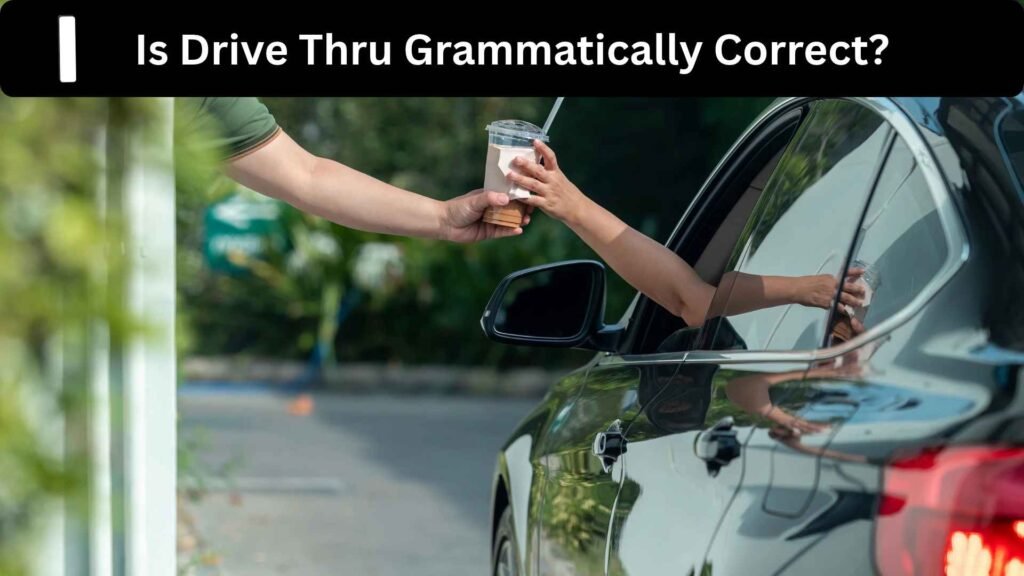
Yes, drive-thru is acceptable in informal English.
However, it is not generally the preferred spelling for academic assignments, professional reports, or other formal documents.
The shortened word “thru” is widely recognized, but “through” remains the standard spelling.
For example:
Informal: I bought lunch at the drive-thru.
Formal: I purchased lunch at the drive-through.
Both sentences are understandable and grammatically natural within their respective styles.
Is Drive Thru a Real Word?
Yes. Thru is an established informal spelling of through.
It is commonly found in commercial language, particularly on signs and advertisements.
However, thru should not automatically replace through in ordinary sentences.
For example:
Incorrect in standard writing:
We walked thru the park.
Correct:
We walked through the park.
The informal spelling may appear in casual messages, but standard English favors through.
Can You Use Drive Thru in Academic Writing?
For academic writing, drive-through is usually the better choice.
It follows standard spelling conventions and is more appropriate for essays, research papers, and formal assignments.
However, drive-thru can be used when quoting an advertisement or discussing a company’s specific wording.
Example:
The restaurant displayed a sign reading “Drive-Thru Open.”
Here, the spelling is appropriate because it reproduces the wording of the sign.
Drive Thru or Drive Through in American English
American English commonly uses both drive-through and drive-thru.
The difference usually depends on the setting.
Drive-through appears in standard written English, including professional documents, educational materials, and edited publications.
Drive-thru is particularly common in restaurant advertising and everyday communication.
American English Examples
- The restaurant opened a new drive-through.
- We ordered coffee at the drive-thru.
- The bank provides drive-through services.
- The drive-thru line was unusually long.
- She drove through the city during rush hour.
These examples demonstrate how American English uses different forms depending on grammatical function and context.
Why Is Drive Thru Popular in America?
Drive-thru became familiar through commercial signage and advertising, particularly in businesses serving customers in vehicles.
Its short spelling is practical for signs that drivers need to recognize quickly.
Fast-food restaurants, coffee shops, and other businesses frequently use this style.
However, its popularity does not make the full spelling incorrect.
Both forms remain widely understood.
Drive Thru or Drive Through in British English
British English generally favors drive-through in standard writing.
The informal spelling drive-thru may appear in advertising, particularly when international businesses use consistent branding across different countries.
Examples:
Standard: The restaurant offers a drive-through service.
Informal advertisement: Drive-Thru Open Daily.
The two-word verb phrase drive through is also standard in British English.
Example:
We drove through London on our way to the coast.
The grammatical rules are essentially the same in American English and British English.
Is Drive Thru Only American English?
No. Although drive-thru is strongly associated with informal American English, it can also appear in other English-speaking countries.
International businesses may use the spelling in advertising or on signs.
However, drive-through remains the more suitable choice for formal English in both American and British contexts.
How to Pronounce Drive Thru or Drive Through
Drive thru or drive through has the same pronunciation.
The difference is in spelling, not sound.
Pronunciation: /ˈdraɪv θruː/
Simple pronunciation: DRYV THROO
The word “drive” rhymes with “five.”
The word “through” sounds like “threw.”
The shortened spelling “thru” has exactly the same pronunciation as “through.”
Does Thru Sound Different From Through?
No. Thru and through are pronounced identically.
Examples:
- Drive-thru
- Drive-through
- Drive through town
All three contain the same spoken sounds.
The spelling changes according to grammar and writing style.
Why Is Through Spelled Differently From Its Pronunciation?
English spelling has developed over many centuries, and some words retain letter combinations that no longer reflect their pronunciation directly.
Through is one example.
The shortened spelling thru represents the pronunciation more simply, but through remains the standard spelling.
Common Types of Drive-Through Services
Drive-through services are not limited to fast-food restaurants.
Many industries use vehicle-accessible facilities to provide convenience.
Drive-Through Restaurants
Fast-food restaurants are among the most familiar examples.
Customers typically place orders, make payments, and collect food while remaining inside their vehicles.
Example:
We stopped at the drive-through restaurant for dinner.
Drive-Through Coffee Shops
Some coffee shops offer drive-through windows for customers who want drinks without entering the building.
Example:
She purchased a latte from the drive-through coffee shop.
Drive-Through Banks
Some banks provide drive-through windows or machines for selected banking transactions.
Example:
He used the bank’s drive-through facility to deposit a check.
Drive-Through Pharmacies
Certain pharmacies allow customers to collect prescriptions through a drive-through window.
Example:
The pharmacy provides drive-through prescription pickup.
Drive-Through Car Washes
Some automated car washes allow vehicles to move through a washing system.
Example:
We visited a drive-through car wash after our road trip.
These examples show how the term applies to different services.
Drive-In or Drive-Through: What Is the Difference?

Drive-in or drive-through are related expressions, but they describe different types of services.
A drive-in is usually a location where customers enter and park their vehicles while receiving a service or enjoying an activity.
A drive-through generally involves moving through a designated lane to receive a service.
| Feature | Drive-In | Drive-Through |
|---|---|---|
| Vehicle movement | Customers usually park | Customers usually move through a lane |
| Typical service | Entertainment or food service | Ordering, payment, or pickup |
| Example | Drive-in movie theater | Drive-through restaurant |
| Main purpose | Receive service while parked | Receive service without leaving the vehicle |
Drive-In Examples
- We watched a movie at the drive-in theater.
- The restaurant offers drive-in dining.
- Customers parked at the drive-in.
Drive-Through Examples
- We ordered burgers at the drive-through.
- The coffee shop has a drive-through window.
- The bank operates a drive-through lane.
Both concepts allow customers to remain in their vehicles, but their layouts and service processes differ.
Common Mistakes With Drive Thru or Drive Through
Several spelling mistakes occur because these expressions sound identical.
Learning the following rules can help you avoid them.
Mistake 1: Using Drive-Thru in Formal Writing
Less suitable:
The company introduced a drive-thru facility.
Preferred:
The company introduced a drive-through facility.
The second sentence follows standard spelling conventions.
Mistake 2: Hyphenating a Verb Phrase
Incorrect:
We will drive-through the city tomorrow.
Correct:
We will drive through the city tomorrow.
A hyphen is unnecessary because drive through functions as a verb phrase.
Mistake 3: Omitting the Hyphen in a Compound Noun
Less standard:
The restaurant has a drive through.
Preferred:
The restaurant has a drive-through.
The hyphen makes the compound noun clear.
Mistake 4: Assuming Drive Thru Has a Different Meaning
Some learners think drive-thru describes a different type of business service.
In commercial contexts, drive-thru and drive-through generally have the same meaning.
The main difference is spelling and formality.
Mistake 5: Mixing Spellings Without a Reason
Inconsistent:
The restaurant opened a drive-through. Its drive-thru was immediately popular.
More consistent:
The restaurant opened a drive-through. Its drive-through was immediately popular.
Consistent spelling improves readability, especially in professional documents.
An exception is appropriate when quoting signs or reproducing established business terminology.
Drive Thru or Drive Through: 20 Example Sentences
The following examples demonstrate how these expressions work in everyday English.
Examples Using Drive Through
- We will drive through the city tomorrow.
- Please drive through the tunnel carefully.
- They decided to drive through the mountains.
- I often drive through this neighborhood.
- The driver had to drive through heavy traffic.
- We plan to drive through the countryside.
- You can drive through the park during the day.
Examples Using Drive-Through
- The restaurant has a drive-through.
- We ordered breakfast at the drive-through.
- The drive-through was crowded this morning.
- She visited a drive-through pharmacy.
- The company installed a new drive-through window.
- The bank offers drive-through services.
- The drive-through lane was closed for maintenance.
Examples Using Drive-Thru
- Let’s stop at the drive-thru for coffee.
- The drive-thru opens at six in the morning.
- I ordered a burger from the drive-thru.
- The restaurant advertised its new drive-thru menu.
- The drive-thru line was unusually long.
- Our drive-thru is open every day.
These sentences demonstrate the grammatical and stylistic differences among the three forms.
How to Remember Drive Thru or Drive Through
The easiest way to remember the correct spelling is to identify what the sentence describes.
If the sentence describes an action, use drive through.
If it names a service or facility in standard writing, use drive-through.
If the wording appears in informal advertising, drive-thru is acceptable.
Simple Memory Trick
Remember these three examples:
Action: We drive through the city.
Standard service: The drive-through is open.
Informal advertisement: Drive-Thru Open 24 Hours!
This simple rule works in most situations.
Quick Grammar Test
Choose the correct form for each sentence.
Question 1: We will _____ the tunnel tomorrow.
Answer: drive through
Question 2: The restaurant has a new _____ window.
Answer: drive-through
Question 3: The advertisement says “_____ Open Now!”
Answer: Drive-Thru
Question 4: Customers waited at the _____ for their food.
Answer: drive-through
Question 5: We often _____ this neighborhood.
Answer: drive through
If you understand these examples, you can confidently choose the correct form in everyday writing.
Frequently Asked Questions About Drive Thru or Drive Through
Is It Drive Thru or Drive Through?
Both forms are used, but drive-through is the standard spelling when referring to a vehicle-accessible service. Drive-thru is an informal shortened spelling commonly used in advertisements and restaurant signs.
Is Drive Thru Grammatically Correct?
Yes. Drive-thru is acceptable in informal English, particularly in American commercial language. However, drive-through is generally preferred in formal writing.
Is Drive-Through One Word or Two?
Drive-through is a hyphenated compound word. It contains two parts joined by a hyphen. The verb phrase drive through is written as two separate words.
Should Drive-Through Be Hyphenated?
Yes. Drive-through is normally hyphenated when used as a compound noun or adjective.
Examples include “the drive-through is open” and “a drive-through restaurant.”
Is Drive Thru American English?
Drive-thru is especially common in informal American English. However, drive-through is also standard in American English, particularly in professional and academic writing.
Is Drive Thru Used in British English?
Yes, drive-thru can appear in British advertising and international business branding. However, drive-through is generally preferred in standard British English.
What Is the Plural of Drive-Through?
The standard plural is drive-throughs.
Example:
The company operates several drive-throughs across the country.
The informal plural is drive-thrus.
Example:
Many drive-thrus remain open late at night.
Is It McDonald’s Drive Thru or Drive Through?
McDonald’s commonly uses “Drive Thru” in its customer-facing branding and advertising. However, “McDonald’s drive-through” is also correct when describing the service in standard English.
Can Drive Through Be Used as a Verb?
Yes. Drive through is a verb phrase that describes traveling through a location.
Example:
We drive through the park every morning.
It should not be hyphenated when used this way.
What Is the Difference Between Drive-In or Drive-Through?
A drive-in usually allows customers to park their vehicles while receiving a service or enjoying an activity. A drive-through generally allows customers to move through a designated lane to order, pay, or collect something.
Is Drive Thru Appropriate for Business Signs?
Yes. Drive-thru is commonly used on business signs because it is short and easy to recognize. Drive-through is also correct and may be preferred for more formal business communication.
Is Drive Through Correct Without a Hyphen?
Yes, when it functions as a verb phrase.
Example:
We will drive through the mountains tomorrow.
However, drive-through is the standard spelling when referring to a facility or service.
Which Spelling Is Best for Professional Writing?
Drive-through is usually the best choice for professional writing. It follows standard English spelling conventions and is suitable for reports, articles, business documents, and academic assignments.
Why Do Restaurants Spell Through as Thru?
Restaurants often use thru because it is shorter, familiar, and convenient for signs or advertisements. The abbreviated spelling communicates the same basic meaning in commercial contexts.
Does Drive Thru Mean the Same Thing as Drive Through?
When both expressions refer to a vehicle-accessible business service, they have essentially the same meaning. However, the separate verb phrase drive through can also describe traveling through a location, while drive-thru is not normally used for that meaning in standard writing.
Conclusion
Understanding the difference between drive thru or drive through is important for accurate spelling, clear communication, and professional writing.
Drive-through is the standard spelling when describing a service or facility that customers can access while remaining inside their vehicles. It is generally preferred in academic writing, professional documents, and formal communication.
Drive-thru is an informal shortened version commonly used in restaurant advertising, business signs, and casual American English. It communicates the same basic meaning but is less suitable for formal contexts.
Meanwhile, drive through without a hyphen is the correct verb phrase when describing the action of traveling through a location.
The easiest way to remember the difference is simple: use drive through for an action, drive-through for a standard noun or adjective, and drive-thru for informal advertising or commercial language.
Following these rules will help you choose the correct spelling and avoid common English writing mistakes.

I am Oliver Harrington, a writer interested in education, useful skills, and the many ways people can continue learning throughout life. I enjoy researching topics and presenting information in a clear, straightforward way. At Teachlora, I share educational insights, learning resources, study advice, and practical ideas designed to help readers grow their knowledge. I also wrote The Lifelong Learner’s Path and Simple Skills for Better Learning to encourage readers to make learning a regular part of life.
Books:
- The Lifelong Learner’s Path
- Simple Skills for Better Learning
 Eleanor Whitmore
 Nathaniel Brooks