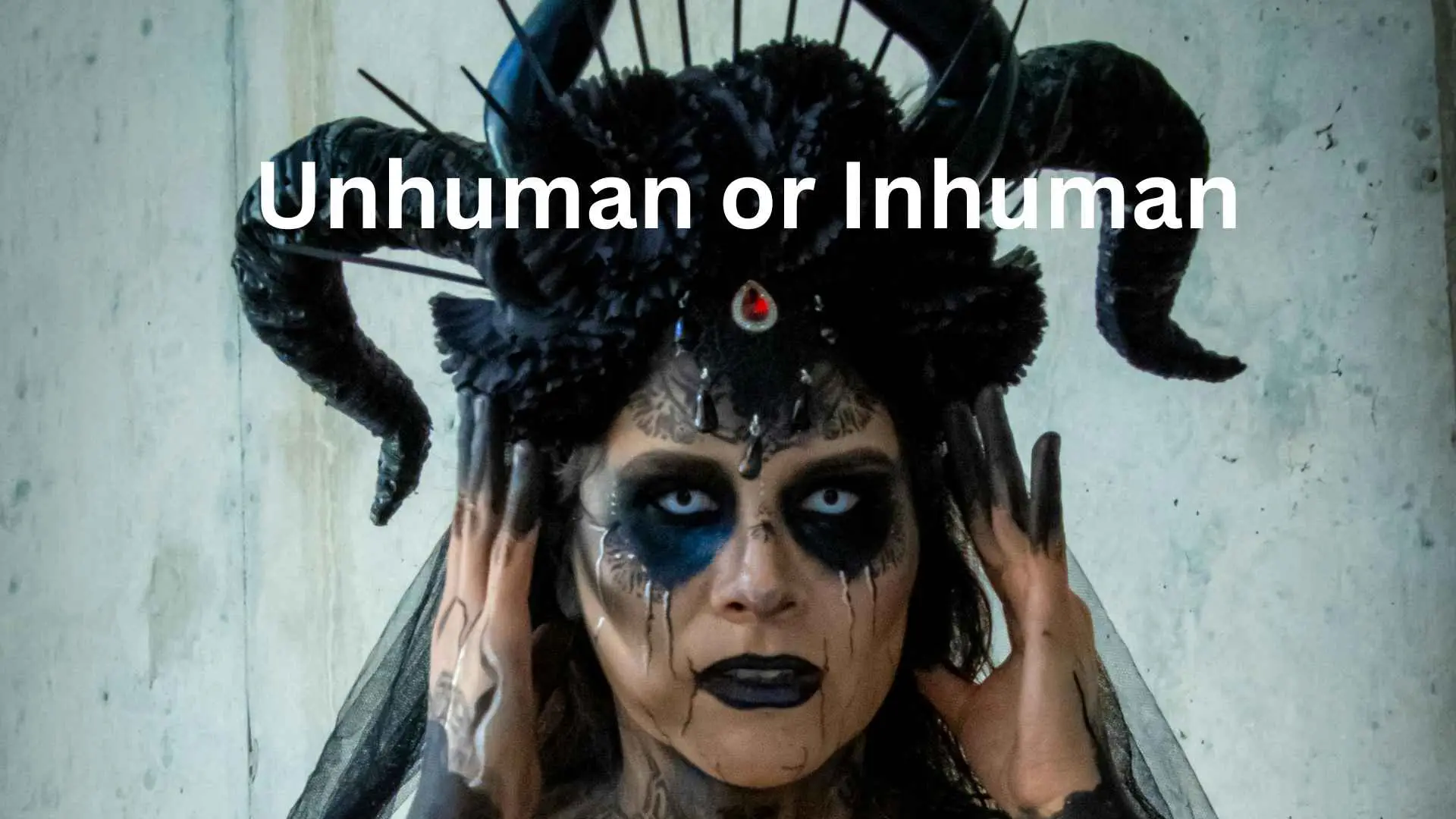
Confused about unhuman or inhuman? These two words look similar, but they have different meanings and uses. Inhuman is the much more common word in modern English. It is often used to describe cruel behavior, brutal treatment, extreme conditions, or something that seems far beyond normal human ability. Unhuman is also a real word, but it is uncommon and generally refers to something that is not human or does not seem human.
Knowing the difference between unhuman or inhuman can help you choose the right word for essays, academic writing, professional content, fiction, or everyday English. This guide explains their meanings, usage, examples, common mistakes, related terms, synonyms, or frequently asked questions in clear language.
Unhuman or Inhuman: Quick Answer
Inhuman is usually the correct choice when you want to describe something cruel, brutal, or lacking compassion.
Unhuman can describe something that is not human or unlike a human, but the word is much less common.
A simple way to remember the distinction is:
- Inhuman = cruel, brutal, lacking compassion, or beyond ordinary human qualities
- Unhuman = not human or unlike a human
- Nonhuman = not human, especially in factual or scientific writing
Quick Examples
The prisoners experienced inhuman treatment.
Here, inhuman means cruel or lacking compassion.
The creature had an unhuman appearance.
Here, unhuman means unlike a normal human.
Scientists studied nonhuman primates.
Here, nonhuman simply means primates that are not humans.
For most situations involving cruelty or brutal treatment, inhuman is the natural choice.
What Does Inhuman Mean?
Inhuman is an adjective with several related meanings. Its most common meaning is cruel, brutal, or lacking normal human compassion.
For example:
The prisoners were subjected to inhuman treatment.
In this sentence, inhuman means that the prisoners were treated in a cruel or unacceptable way.
The word can also describe something that seems far beyond normal human abilities or characteristics.
For example:
The athlete showed inhuman strength.
Here, inhuman does not necessarily mean cruel. It means the athlete’s strength seemed extraordinarily greater than what is normally expected from a human.
Common Uses of Inhuman
Some common expressions include:
- inhuman treatment
- inhuman conditions
- inhuman behavior
- inhuman cruelty
- inhuman acts
- inhuman suffering
- inhuman strength
- inhuman speed
- inhuman endurance
- inhuman precision
The exact meaning depends on the context in which the word appears.
What Does Unhuman Mean?
Unhuman generally means not human or unlike a human.
The word exists in English, but it is considerably less common than inhuman. It can appear in literary, fictional, descriptive, or specialized contexts.
For example:
The creature had an unhuman face.
The sentence suggests that the creature’s face did not look human.
Another example is:
The robot moved with an unhuman precision.
Here, unhuman describes movement that seemed unlike ordinary human movement.
Because unhuman is uncommon, it may sound unusual to some readers. When the intended meaning is simply “not human,” nonhuman is often a clearer choice in factual writing.
Unhuman or Inhuman: What Is the Difference?
The easiest way to understand unhuman or inhuman is to focus on the meaning you want to communicate.
| Word | Main meaning | Typical usage |
|---|---|---|
| Inhuman | Cruel, brutal, lacking compassion, or beyond ordinary human qualities | Very common |
| Unhuman | Not human or unlike a human | Uncommon |
| Nonhuman | Not human | Common in factual or scientific contexts |
Consider these sentences:
The prisoners received inhuman treatment.
This means the treatment was cruel.
The monster had an unhuman appearance.
This means the monster looked unlike a human.
Researchers observed nonhuman primates.
This means primates that are not humans.
The intended meaning determines which word fits the sentence.
When Should You Use Inhuman?
Use inhuman when discussing cruelty, brutality, suffering, or behavior that lacks compassion.
Inhuman Treatment
Inhuman treatment is one of the most common expressions using this word.
The organization was accused of providing inhuman treatment to prisoners.
The phrase indicates that the treatment was cruel or lacked basic human compassion.
Inhuman Conditions
The workers were forced to live in inhuman conditions.
This means the conditions were extremely harsh or unsuitable for people.
Inhuman Behavior
His inhuman behavior shocked everyone.
Here, inhuman suggests behavior that was extremely cruel or lacking compassion.
Inhuman Cruelty
The story describes acts of inhuman cruelty.
This expression emphasizes extreme brutality.
When Should You Use Unhuman?
Use unhuman when you want to emphasize that something is unlike a human or not human.
The word can work particularly well in fictional or imaginative descriptions.
Unhuman Appearance
The creature had an unhuman appearance.
The creature looked unlike an ordinary person.
Unhuman Voice
The alien spoke in an unhuman voice.
The voice sounded unlike a typical human voice.
Unhuman Movement
The machine moved with an unhuman rhythm.
Its movements did not resemble ordinary human movements.
In factual writing, nonhuman may communicate the intended meaning more clearly.
Is Unhuman a Correct Word?
Yes, unhuman is a legitimate English word.
However, being a valid word does not mean it is the best choice in every sentence. Its use is relatively uncommon, so writers should select it according to context.
For example:
The prisoners received unhuman treatment.
This sounds unusual if the intended meaning is “cruel treatment.”
A more natural sentence is:
The prisoners received inhuman treatment.
Now consider:
The creature had an unhuman appearance.
Here, the writer is describing something that does not look human, so unhuman can fit the intended meaning.
If the meaning is simply “not human,” another option is:
The creature had a nonhuman appearance.
Is Inhuman a Correct Word?
Yes. Inhuman is a standard, widely used English adjective.
It is especially common when describing cruelty or a lack of compassion.
For example:
The victims were subjected to inhuman conditions.
It can also describe extraordinary characteristics:
The runner maintained an inhuman pace.
In the first example, inhuman refers to cruelty or unacceptable treatment.
In the second example, it refers to an ability that appears far beyond ordinary human limits.
Inhuman or Inhumane: What Is the Difference?
Inhuman or inhumane can overlap when discussing cruelty, but they do not have exactly the same range of meaning.
Inhumane strongly emphasizes a lack of kindness, mercy, compassion, or humane treatment.
For example:
The animals were subjected to inhumane treatment.
Inhuman can also describe cruel treatment:
The prisoners endured inhuman conditions.
The important distinction is that inhuman has another common use. It can describe something extraordinarily beyond normal human ability.
The athlete demonstrated inhuman endurance.
In this sentence, inhumane would not communicate the intended meaning.
Inhuman Can Mean More Than Cruel
A common misunderstanding is that inhuman always means cruel.
It does not.
Consider:
She displayed inhuman strength.
The sentence does not necessarily accuse her of cruelty. Instead, it says her strength was extraordinarily great.
Another example is:
The machine operated with inhuman precision.
Here, inhuman suggests precision beyond normal human capability.
Other examples include:
He ran at an inhuman speed.
The climber showed inhuman endurance.
The character possessed almost inhuman reflexes.
In these examples, the word refers to qualities that seem beyond ordinary human limits.
Unhuman or Nonhuman: Which Word Is Better?
If your intended meaning is simply not human, nonhuman is often the clearer choice.
For example:
Scientists study nonhuman primates.
This clearly refers to primates that are not humans.
Another example is:
The researchers observed nonhuman behavior in the animals.
The prefix non- directly communicates the meaning of “not.”
By contrast, unhuman can sound literary or unusual.
That does not make it incorrect. It simply means that nonhuman may be more suitable for scientific, technical, academic, or factual writing.
Consider These Examples
The robot has a nonhuman design.
This sounds neutral or factual.
The robot has an unhuman design.
This sounds more unusual or literary.
The villain displayed inhuman cruelty.
This clearly describes extreme cruelty.
The meaning you want to express should determine your word choice.
Common Mistakes With Unhuman or Inhuman
Mistake 1: Using Unhuman for Cruel Treatment
An unusual sentence is:
The prisoners received unhuman treatment.
If you mean cruel treatment, use inhuman:
The prisoners received inhuman treatment.
Mistake 2: Assuming Inhuman Always Means Cruel
Consider:
The athlete showed inhuman strength.
Here, inhuman refers to extraordinary ability rather than cruelty.
Mistake 3: Using Unhuman When Nonhuman Is Clearer
In factual writing:
The study examined nonhuman animals.
This is often clearer than:
The study examined unhuman animals.
Mistake 4: Treating Prefixes as Exact Substitutes
English word formation does not always work by simply switching one prefix for another. Established usage, context, or meaning all matter when selecting a word.
Unhuman or Inhuman Examples
Examples make the distinction easier to remember.
Examples With Inhuman
The prisoners endured inhuman conditions.
The report described the treatment as inhuman.
His actions were considered inhuman.
The victims suffered inhuman cruelty.
The athlete displayed inhuman strength.
The runner maintained an inhuman pace.
She demonstrated inhuman endurance.
Examples With Unhuman
The creature had an unhuman appearance.
The alien’s eyes looked unhuman.
The robot moved with an unhuman rhythm.
The character spoke in an unhuman voice.
The monster had an unhuman face.
These examples show why context matters when selecting the appropriate word.
Unhuman or Inhuman in Fiction
Writers have more flexibility with unhuman in fiction.
A fantasy or science-fiction writer may use unhuman to describe an alien, monster, supernatural being, or machine that does not resemble a human.
For example:
The creature’s unhuman eyes stared through the darkness.
The word emphasizes that the creature looks different from humans.
Inhuman can also work in fiction, but it can emphasize a different quality:
The creature showed inhuman cruelty.
Here, the focus is on the creature’s lack of compassion.
The surrounding sentence therefore helps readers understand the intended meaning.
Synonyms for Inhuman
When inhuman means cruel or brutal, possible alternatives include:
- cruel
- brutal
- ruthless
- merciless
- heartless
- barbaric
- callous
- vicious
- inhumane
- savage
When inhuman describes extraordinary ability, alternatives include:
- extraordinary
- exceptional
- superhuman
- remarkable
- extreme
- phenomenal
The most suitable synonym depends on the context.
Synonyms for Unhuman
Depending on the intended meaning, alternatives for unhuman include:
- nonhuman
- alien
- unnatural
- otherworldly
- creature-like
- machine-like
- unlike a human
For example:
The creature had an unhuman appearance.
This could be rewritten as:
The creature had a nonhuman appearance.
In fictional writing, you could also say:
The creature had an otherworldly appearance.
How to Remember Unhuman or Inhuman
A simple memory rule can make the difference easier.
Remember Inhuman
Think:
Inhuman = cruel or beyond ordinary human qualities
Example:
The prisoners experienced inhuman treatment.
Remember Unhuman
Think:
Unhuman = unlike a human
Example:
The creature had an unhuman appearance.
Remember Nonhuman
Think:
Nonhuman = not human
Example:
Scientists study nonhuman species.
This three-word distinction can help prevent common usage mistakes.
Frequently Asked Questions About Unhuman or Inhuman
Is inhuman or unhuman correct?
Both are legitimate English words, but inhuman is much more common. Use inhuman for cruelty, brutality, lack of compassion, or something extraordinarily beyond normal human ability. Use unhuman when you mean not human or unlike a human.
Is unhuman a real word?
Yes. Unhuman is a real English adjective. It can describe something that is unlike a human or does not have human characteristics. It is much less common than inhuman.
Should I say inhuman treatment or unhuman treatment?
Use inhuman treatment when you mean cruel, brutal, or lacking compassion.
The prisoners received inhuman treatment.
This is the standard expression.
What is the difference between unhuman or inhuman?
Inhuman commonly means cruel, brutal, or lacking compassion. It can also describe something that seems far beyond normal human ability. Unhuman generally means not human or unlike a human and is less common.
Is inhuman a negative word?
Usually, inhuman has a negative meaning when it describes cruelty or brutality. However, it can be neutral in context when describing extraordinary ability.
The athlete showed inhuman strength.
Is unhuman the opposite of human?
It can mean something that is not human or unlike a human, but unhuman is uncommon. In factual contexts, nonhuman is often a clearer way to express “not human.”
What is the difference between inhuman or inhumane?
Inhumane focuses strongly on a lack of compassion or humane treatment. Inhuman can describe cruelty too, but it can also refer to something beyond ordinary human abilities.
Can I use unhuman in academic writing?
You can use unhuman when it accurately expresses your intended meaning, but it is uncommon. If you simply mean “not human,” nonhuman may be clearer in academic or scientific writing.
What is the opposite of inhuman?
The appropriate opposite depends on the intended meaning. For cruelty, words such as humane, kind, or compassionate can work. For something beyond human qualities, the opposite may be human or ordinary.
Conclusion
The difference between unhuman or inhuman becomes easier to understand when you focus on the intended meaning.
Inhuman is the standard or much more common word. It can describe cruel or brutal behavior, treatment, or conditions. It can also describe something that seems extraordinarily beyond normal human ability.
Unhuman is a legitimate but uncommon word. It generally describes something that is not human or unlike a human, particularly in literary, fictional, or descriptive contexts.
If you mean cruel or lacking compassion, choose inhuman.
If you mean not human or unlike a human, unhuman can work, although nonhuman is often clearer in factual writing.

I am Nathaniel Brooks, a writer passionate about education and lifelong learning. I believe good educational content should be easy to understand, useful, and enjoyable to read. At Teachlora, I create helpful articles about learning techniques, study habits, general knowledge, and skills that can support readers in their educational journey. I have also written Learn Better Every Day and The Practical Student Handbook to help readers approach learning with more confidence.
Books:
- Learn Better Every Day
- The Practical Student Handbook
 Clara Kensington
 Eleanor Whitmore